
In This Guide
- Is black grout always mold?
- Nine common reasons grout turns black
- What the location of the discoloration may reveal
- How to clean dark grout safely
- When professional grout cleaning may help
- When cleaning is not the correct solution
- How to prevent grout from turning black again
- Frequently asked questions
If you are wondering why grout turns black, the answer is not always as simple as “the floor is dirty.” Dark grout lines can result from embedded soil, dirty mop water, cleaning-product residue, grease, moisture or deterioration within the grout itself.
The location and condition of the discoloration can provide useful clues. Black grout along a busy kitchen floor may have a different cause from dark spots that repeatedly appear around a shower corner.
Understanding the likely cause can help you choose a safer cleaning method—and recognize when cleaning alone may not solve the underlying problem.
Quick answer: Grout usually turns black because dirt, cleaning residue, grease or moisture becomes trapped within or on top of the grout lines. In bathrooms, recurring black spots may also be associated with persistent moisture or biological growth. If grout remains dark after appropriate cleaning or begins cracking and crumbling, cleaning alone may not solve the problem.
Is Black Grout Always Mold?
No. Black or dark grout is not automatically mold.
Discoloration may come from tracked-in dirt, cooking grease, soap residue, dirty mop water or cleaning products that were not completely removed. Moisture-related growth is another possibility, particularly in showers and poorly ventilated bathrooms, but color alone cannot identify the substance.
Avoid assuming every black mark is mold without an appropriate evaluation. Professional tile cleaning can remove certain types of soil and surface buildup, but it is not a substitute for mold remediation, plumbing repairs or correcting a moisture problem.
The Environmental Protection Agency explains that controlling moisture is an essential part of controlling indoor mold. If dark discoloration continues returning, the moisture source may need to be addressed rather than repeatedly covered with stronger cleaning products.
Read the EPA’s moisture-control guidance.
Nine Common Reasons Grout Turns Black
1. Embedded Dirt and Foot Traffic
Grout lines are often more textured than the surrounding tile. Cement-based grout may also absorb or hold soil more readily, especially when it is unsealed or the existing sealer has deteriorated. Entryways, kitchens, hallways, commercial spaces, pet areas and locations near exterior doors are especially vulnerable. As soil accumulates, originally light grout may gradually appear gray, brown or black.
2. Dirty Mop Water
Mopping does not always remove soil completely. Once mop water becomes dirty, it can redistribute suspended soil across the floor. Because grout lines may sit slightly lower than the tile, contaminated water can collect within them. When the water evaporates, soil and cleaning residue remain behind.
3. Too Much Cleaning Product
Using more cleaner than the label recommends can leave a sticky or cloudy film. That residue may attract additional dirt and cause the floor to appear dirty again soon after cleaning. Warning signs include tacky tile, visible footprints, cloudy film or grout that darkens after mopping.
4. Bathroom Moisture and Limited Ventilation
Bathrooms combine moisture, warmth and organic residue. When the room does not dry properly, dark discoloration may develop around grout lines, caulk, shower corners and other frequently damp areas. Running an exhaust fan, removing standing water and allowing towels and bathmats to dry can help.
5. Soap, Body Oil and Personal-Care Products
Soap, shampoo, conditioner, body oils and skin-care products can collect on shower walls and floors. These materials may combine with minerals and ordinary soil, creating a film that darkens grout over time.
6. Cooking Grease
Kitchen grout may absorb or hold grease, particularly near cooktops and food-preparation areas. Once grease becomes sticky, it captures dust and other particles, causing the joints to appear progressively darker.
7. Failed Sealer or Unsealed Grout
Some cement-based grout is treated with a penetrating sealer to improve stain resistance. A sealer does not make grout maintenance-free or completely waterproof, but it may slow the absorption of certain spills. Identify the grout type and follow manufacturer instructions before applying any sealer.
8. Cracked or Deteriorating Grout
When grout cracks, crumbles or separates from the tile, dirt and moisture can collect within the damaged area. Cleaning may improve the visible surface temporarily, but it will not restore the failed joint.
9. A Leak or Continuing Moisture Problem
Dark grout that repeatedly returns in one specific location may indicate more than surface buildup. Persistent dampness, musty odors, loose tile, failed caulk, crumbling grout or staining on an adjoining wall
should be investigated by the appropriate professional.
Why Grout Can Darken Quickly in NYC Properties
NYC apartments and commercial properties often combine heavy foot traffic, compact bathrooms, limited ventilation and frequent floor cleaning.
Street soil may be tracked into entryways, hallways and other tiled areas. Smaller bathrooms may also remain humid longer after showers, especially when ventilation is limited.
These conditions do not automatically cause black grout, but they can make soil and moisture-related discoloration develop more quickly. A consistent cleaning routine and prompt attention to moisture concerns can help prevent recurring buildup.
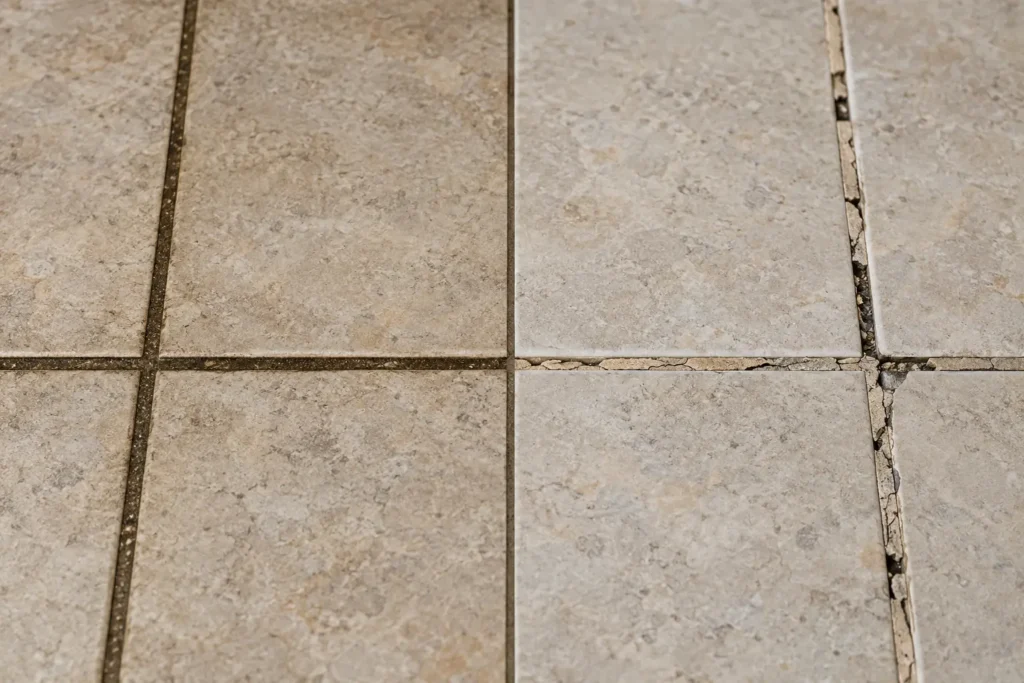
What the Location of Dark Grout May Reveal
| What you notice | Possible cause | Likely next step |
|---|---|---|
| Dark traffic lanes but solid grout | Embedded soil | Professional cleaning may help |
| Sticky floor after mopping | Product residue | Correct dilution and remove residue |
| Dark shower corners that return | Persistent moisture | Improve drying and investigate moisture |
| Greasy grout near a cooktop | Cooking residue | Use a material-appropriate process |
| Cracked or missing grout | Deteriorated joints | Contact a tile-repair professional |
| Loose tile or staining below shower | Possible leak | Investigate the moisture source |
| Widespread suspected mold growth | Moisture-related contamination | Contact an appropriate remediation professional |
This table is only a starting point. Similar-looking discoloration can have different causes, and the correct solution depends on the tile, grout and condition of the installation.
How to Clean Dark Grout Safely
Before cleaning, identify the tile material whenever possible. A method tolerated by glazed ceramic or porcelain could permanently damage marble, limestone, travertine or another natural stone.
Step 1: Remove Loose Soil
Sweep or vacuum the area using a hard-floor setting. Applying liquid cleaner before removing grit can turn loose debris into muddy residue that settles into the grout lines.
Step 2: Select a Suitable Cleaner
Choose a product approved for the specific tile and grout type. A properly diluted pH-neutral cleaner is often the safest starting point for routine care. Read the complete product label.
Step 3: Test a Small Area
Apply the product to an inconspicuous location first. Check for discoloration, etching, dullness or changes to the grout before treating the entire surface.
Step 4: Use a Soft Nylon Brush
Gently agitate grout with a soft nylon brush. Avoid metal brushes and highly abrasive pads, which may scratch tile or erode the joints.
Step 5: Remove the Dirty Solution
Wipe or extract the loosened soil rather than allowing it to dry back into the grout. Work in manageable sections and change rinse water as it becomes dirty.
Step 6: Rinse When Required
Some products require rinsing. Use clean water and fresh microfiber materials so residue is not redistributed.
Step 7: Dry the Area
Drying is particularly important in bathrooms. Use ventilation and remove standing water so the area does not remain damp longer than necessary.
Technician insight: When tile looks clean but grout remains dark, the problem may be embedded soil or residue below the tile surface. However, grout that is cracked, loose or continuously damp may need repair or moisture investigation rather than additional cleaning.
Cleaning Methods to Avoid
Do Not Mix Cleaning Chemicals
Never mix bleach, ammonia, vinegar, peroxide or other household chemicals. Certain combinations can release dangerous gases or cause harmful reactions.
Do Not Automatically Use Vinegar
Vinegar is frequently recommended online, but acidic products can affect cement-based grout and permanently etch acid-sensitive natural stone. A cleaner being described as “natural” does not mean it is safe for every surface.
Avoid Metal Brushes
Metal bristles can scratch tile finishes and damage grout. Use a soft nylon brush unless the manufacturer specifies another tool.
Avoid Flooding the Floor
Excess water can enter joints, edges and adjoining materials. Apply controlled amounts of solution and remove dirty liquid promptly.
Do Not Scrape Unidentified Residue
Scrapers and abrasive tools can damage glazed tile and natural stone. Construction residue, adhesive and grout haze may require material-specific treatment.
When Professional Grout Cleaning May Help
Household cleaning is most effective on recent surface soil. Professional equipment and cleaning agents may help when soil has accumulated within textured tile and grout over an extended period.
Consider requesting an assessment when:
- Grout remains dark after appropriate routine cleaning
- Traffic lanes are noticeably darker than protected areas
- The floor feels sticky after repeated mopping
- Grease or soap buildup remains visible
- The tiled area is large or difficult to access
- You do not know which products are safe for the material
- You are preparing a property for occupancy, turnover or sale
Empire Steamers provides professional tile and grout cleaning in NYC for residential and commercial properties. The surface should be evaluated before cleaning so the process can be adjusted to the tile, grout and visible condition.
Not sure whether your grout needs cleaning or repair? Empire Steamers can evaluate the visible condition of the tiled area and explain whether professional cleaning is an appropriate next step.
When Cleaning Is Not the Correct Solution
Cleaning improves appearance by removing compatible soil and residue. It does not repair structural, plumbing or installation problems.
You may need another type of professional when:
- Grout is missing or crumbling
- Tiles are loose or cracked
- Caulk has separated
- Water appears behind or beneath the installation
- Staining returns because of an unresolved leak
- The affected area requires mold remediation
- Natural stone requires restoration, polishing or repair
A responsible cleaning company should explain when a problem falls outside the scope of professional cleaning.
How to Prevent Grout From Turning Black Again
Remove Loose Soil Regularly
Vacuuming or sweeping prevents grit from becoming embedded during damp cleaning.
Use Clean Mop Water
Change the water as soon as it becomes visibly dirty. Large or heavily soiled floors may require several water changes.
Measure Cleaning Products
Follow dilution instructions rather than estimating. Excess product can leave residue that attracts more soil.
Dry Bathroom Surfaces
Use a squeegee or microfiber cloth after showering and improve ventilation wherever possible.
Address Leaks Promptly
Cleaning cannot compensate for continuous moisture. Investigate plumbing, caulk and waterproofing concerns before damage progresses.
Clean Spills Early
Oil, food, cosmetics and colored liquids may become more difficult to remove after entering porous grout.
Follow a Consistent Maintenance Routine
For a complete weekly and monthly routine, read our guide to tile and grout maintenance between professional cleanings.
Frequently Asked Questions
Why does my grout turn black after mopping?
Dirty mop water, excess cleaning product and loosened soil may settle into lower grout lines. Use clean microfiber materials, change the water frequently and measure the cleaner according to its label.
Is black grout in a shower always mold?
No. Black grout in a shower may be associated with soap residue, personal-care products, minerals, persistent moisture or biological growth. Color alone is not enough to identify the substance.
Can professional cleaning make grout white again?
Professional cleaning may significantly improve grout affected by soil and compatible residue. However, cleaning cannot guarantee that permanently stained, damaged or originally colored grout will become white.
Should I use bleach on black grout?
Do not use bleach automatically. Its suitability depends on the grout, tile, sealant, ventilation and type of discoloration. Never mix bleach with other cleaners and always follow the manufacturer’s safety directions.
Why does the black discoloration keep returning?
Recurring discoloration may indicate continuing moisture, product residue, porous grout, inadequate ventilation, damaged caulk or an unresolved leak. The underlying cause must be addressed for the improvement to last.
Should dark grout be cleaned or replaced?
Grout that is structurally sound may benefit from professional cleaning. Grout that is cracked, loose, missing or crumbling may require repair or replacement instead.
Is professional tile cleaning safe for natural stone?
Natural stone requires material-specific products and methods. The surface should be identified before cleaning because acids, abrasives and some alkaline products can damage certain stones.

Find Out Why Your Grout Keeps Turning Black
Now that you understand why grout turns black, the next step is determining whether the problem is ordinary buildup, continuing moisture or damaged grout. If routine cleaning is no longer improving the surface, Empire Steamers can evaluate the tiled area and discuss an appropriate cleaning approach..
Request an estimate or call 929-435-1144 to ask about tile and grout cleaning in New York City.