
In This Guide
Tile and grout maintenance does not need to be complicated. A consistent routine, the right tools and cleaning products suited to the surface can slow down buildup and help tiled areas remain easier to manage between professional appointments. This matters especially in New York City properties, where compact bathrooms, busy kitchens, pets, foot traffic and limited ventilation can cause soil and moisture to collect quickly.
This guide explains how to care for ceramic, porcelain and natural-stone surfaces without relying on overly aggressive methods. It also covers the warning signs that indicate household cleaning may no longer be enough.
Quick answer: Sweep or vacuum loose soil regularly, wipe spills promptly and clean with a pH-neutral product that is appropriate for your tile. Use a soft brush on grout, avoid saturating joints and never assume that one cleaner is safe for every material. When grout stays dark after cleaning, odors return or buildup remains embedded, it may be time to schedule professional service.
A Simple Tile and Grout Maintenance Routine
The most effective routine prevents loose soil and residue from becoming embedded. Grout is often more absorbent than the surrounding tile, so discoloration may appear along the joints even when the tile surface still looks clean. Frequent light maintenance is usually safer and easier than occasional aggressive scrubbing.
1. Remove loose dust and debris
Sweep with a soft broom or vacuum using a hard-floor setting before applying moisture. This keeps grit from being dragged across the tile and prevents damp debris from settling into grout lines. High-traffic entryways and kitchen floors may need attention several times a week.
2. Wipe spills promptly
Blot liquids and lift food residue as soon as practical. Allowing spills to sit can leave pigment, oil or sticky residue behind—particularly on unsealed cement-based grout and porous stone. Avoid rubbing a spill across a larger area.
3. Use a suitable cleaner
Choose a manufacturer-approved, pH-neutral cleaner for routine care. Use the recommended dilution and avoid mixing products. A stronger concentration is not necessarily more effective and may leave residue or affect the finish.
4. Agitate grout gently
Where needed, use a soft nylon grout brush and moderate pressure. Work in a small section, then remove the loosened soil with a clean microfiber cloth or mop. Metal brushes and extremely stiff bristles may scratch tile or erode grout.
5. Rinse and dry
If the product instructions call for rinsing, remove the remaining solution with clean water. Drying the surface helps prevent streaks and reduces lingering moisture in bathrooms and other poorly ventilated spaces.
How Often Should Tile and Grout Be Cleaned?
| Task | Suggested frequency |
|---|---|
| Sweep or vacuum | Several times weekly in busy areas; otherwise as needed |
| Wipe spills and splashes | Promptly |
| Damp-clean tile | Weekly or based on use and manufacturer guidance |
| Inspect grout and sealant | Monthly and whenever staining or cracking appears |
| Professional assessment | When routine care stops producing an acceptable result |
How to Maintain Bathroom Tile and Grout
Bathrooms combine moisture, soap residue, personal-care products and limited airflow. Together, these conditions can make grout look dull and encourage recurring surface buildup.
- Ventilate the room. Run the exhaust fan during bathing and afterward, or open a window when conditions permit.
- Remove standing water. Use a squeegee or microfiber cloth on shower walls and glass after use.
- Address soap residue early. A light, regular cleaning is easier on the surface than allowing layers to harden.
- Watch joints and corners. Cracked grout, failed caulk or movement may require repair rather than stronger cleaning.
- Keep textiles dry. Damp bathmats and towels can hold moisture against nearby surfaces.
Dark discoloration that returns quickly may be related to moisture conditions, failed sealant or material below the visible surface. Cleaning improves soil and buildup, but it does not repair leaks, damaged grout or waterproofing problems.
How to Maintain Kitchen Tile and Grout

Kitchen tile can collect grease, crumbs, tracked-in soil and residue from repeated mopping.
Backsplashes may also develop a film near cooktops and preparation areas.
- Vacuum or sweep before damp cleaning so crumbs are not pushed into the joints.
- Blot oily spills and use a tile-safe degreasing product only when the manufacturer permits it.
- Change mop water as it becomes soiled; dirty water can redistribute residue into grout lines.
- Use a clean microfiber mop rather than an overly wet string mop.
- Avoid allowing concentrated cleaner to dry on the surface.
- If the floor looks dull immediately after mopping, the problem may be residue rather than permanent staining.
Review the dilution instructions, rinse when required and use fresh tools.
Cleaning Methods by Tile Material
| Surface | Routine-care approach | Important caution |
|---|---|---|
| Glazed ceramic | Soft tools and a diluted neutral cleaner are commonly appropriate. | Avoid abrasive pads that may affect the glaze. |
| Porcelain | Remove grit first, then damp-clean with a suitable product. | Textured porcelain may hold soil and need gentle agitation. |
| Natural stone | Use a stone-specific, pH-neutral product and follow the fabricator or manufacturer guidance. | Acidic products can etch calcite-based stone such as marble, limestone and travertine. |
| Cement-based grout | Use controlled moisture and a soft nylon brush. | Porous or unsealed grout may absorb spills and cleaning solution. |
| Epoxy grout | Follow the grout manufacturer’s maintenance directions. | Residue and haze may require product-specific treatment. |
Natural stone and specialty surfaces may require material-specific care. Evaluate the material and test any product in an inconspicuous location before broad use. Property owners can also consult educational resources from the Tile Council of North America and the instructions supplied by the tile, grout or sealer manufacturer.
Products and Habits to Avoid
A common tile and grout maintenance mistake is assuming that an aggressive household product will always produce a better result. The wrong chemistry or tool can change the finish, weaken grout or create residue.
- Mixing cleaning chemicals: Never combine products. Certain combinations can release dangerous gases.
- Undiluted or unapproved acids: Acidic products can damage some grout and permanently etch natural stone.
- Metal brushes and abrasive pads: These may scratch tile, damage glaze or erode joints.
- Excess water: Flooding a floor can drive moisture into joints, edges and adjoining materials.
- Repeated residue-heavy products: Waxes, soaps and improperly diluted cleaners may leave a film that attracts more soil.
- High heat without verification: Do not use household steam equipment unless the tile, grout, sealant and installation are suitable for that method.
Safety note: Read the full product label, provide ventilation, wear recommended protective equipment and keep children and pets away from the work area until the surface is safe and dry.
When Routine Cleaning Is No Longer Enough
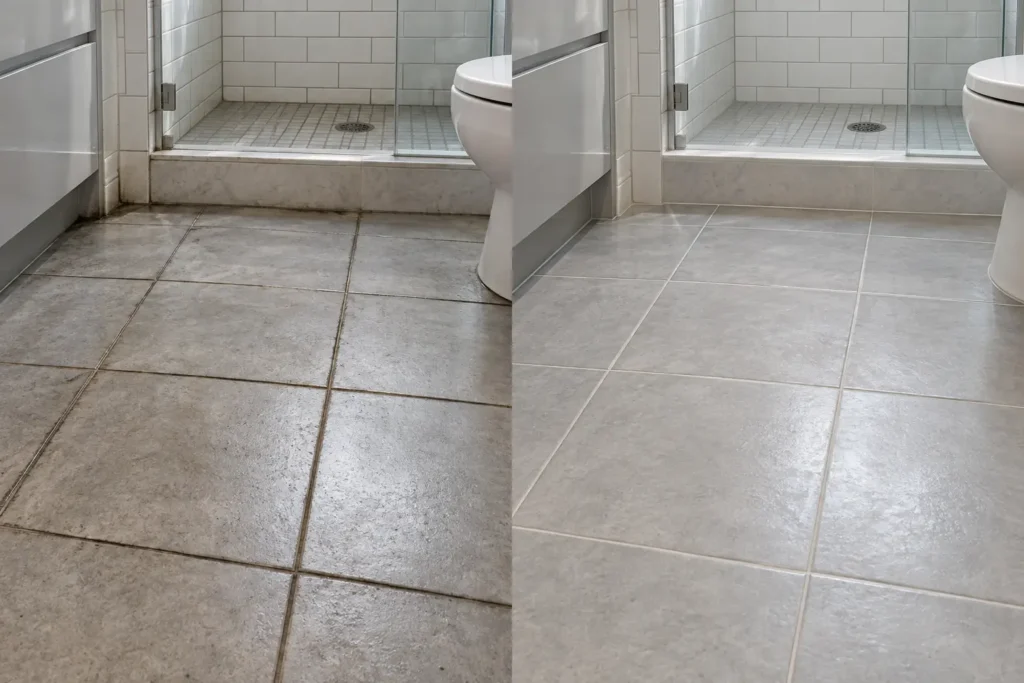
Household maintenance is intended to manage surface soil. It may not remove buildup that has penetrated porous joints or compacted into textured tile. Consider a professional assessment when:
- grout remains dark or uneven after careful routine cleaning;
- sticky or cloudy residue returns soon after the floor dries;
- odor appears to be coming from tiled or grouted areas;
- high-traffic lanes look noticeably different from protected areas;
- the surface is extensive, heavily textured or difficult to access;
- you are unsure whether the material is ceramic, porcelain or natural stone; or
- the property needs a more thorough reset before occupancy, turnover or listing.
Professional equipment and cleaning agents can help loosen and extract accumulated soil more thoroughly than routine mopping. A responsible technician should first identify the surface, discuss visible concerns and select an approach appropriate for the material. Learn more about professional tile and grout cleaning in NYC.
Tile Care After Renovation or Construction
Renovation work may leave fine dust, tracked-in soil, adhesive residue or grout haze on tiled surfaces. Ordinary mopping can move this material around instead of removing it. It is also important to distinguish construction residue from damaged grout, scratched tile or installation defects.
Remove dry debris carefully before introducing moisture, avoid scraping with unapproved tools and consult the product or installation professional before treating new tile. For broader cleanup needs, review Empire Steamers’ post-construction cleaning in NYC service.
Frequently Asked Questions
How often should tile and grout be professionally cleaned?
There is no universal interval. Frequency depends on the tile and grout type, sealing, ventilation, household activity, pets, cooking residue and the effectiveness of routine maintenance. Schedule an assessment when the surface no longer responds well to normal care.
Can I use vinegar on grout?
Do not assume vinegar is safe. Acidic products can affect some cement-based grout and can etch natural stone such as marble, limestone and travertine. Follow the material and product manufacturer’s directions.
Why does my grout become dark again after mopping?
Possible causes include residue in the mop water, excessive cleaner, embedded soil, porous grout or ongoing moisture. Use clean tools and properly diluted product. If discoloration returns quickly, request a professional assessment.
Should grout be sealed?
Some cement-based grout may benefit from an appropriate penetrating sealer, while epoxy and other grout systems have different requirements. Confirm the grout type and follow the manufacturer’s instructions before applying a sealer.
Can professional cleaning repair damaged grout?
Cleaning can improve the removal of soil and residue, but it cannot repair cracking, missing joints, failed caulk, loose tile or water intrusion. Those conditions may require a tile installer, restoration specialist or other qualified trade professional.
Is the same cleaning method safe for natural stone?
No. Natural stone can be sensitive to acids, alkaline products, abrasives and excessive moisture. The material should be identified before selecting a cleaner or professional process.
Keep Your Tile and Grout Looking Its Best
When your routine is no longer producing the result you want, Empire Steamers can evaluate the surface and discuss an appropriate next step. Request an estimate or call 929-435-1144 to ask about tile and grout cleaning in New York City.